Brumeblog com: What Is It and What Should You Know?
Brumeblog com is a website that readers may encounter when searching for online articles, useful information, and explanations of different topics. Understanding what a website offers can help visitors decide whether its content matches their interests and information needs. Before relying on any online publication, readers should examine its purpose, content quality, credibility, and relevance to the subject they want to explore.
In this guide, we explain how to evaluate the website, what readers should look for when browsing its content, and how to identify trustworthy online information. Whether you are researching a new topic or simply exploring unfamiliar websites, knowing how to assess digital content can help you make better decisions and avoid misleading information.
What Is Brumeblog com?
Brumeblog com is a website name that people may search for when looking for information about its identity, content, and purpose. Understanding a website begins with examining its homepage, available categories, published articles, and information about its operators. These details can provide a clearer picture of its intended audience and the subjects it covers.
A website’s actual purpose should be established through its published content rather than assumptions based on its name. Readers should check the available pages, author information, and publication dates before deciding whether the platform meets their needs. This approach provides a more reliable understanding of the website and helps distinguish verified information from descriptions that may be incomplete or outdated.
Main Features and Content to Explore
A useful content website generally organizes information into clear categories and publishes articles that answer readers’ questions. Depending on its actual offerings, a publication may provide explanatory guides, practical tips, educational resources, or general-interest discussions. Readers should explore the available sections to identify subjects that match their interests and determine whether the information is detailed enough for their purposes.
Content quality matters more than the number of articles a website publishes. Helpful pages typically use descriptive headings, clear explanations, relevant examples, and reliable supporting evidence. Visitors should also look for consistent formatting and an easy-to-understand structure. These characteristics make information easier to navigate, although a professional appearance alone does not guarantee factual accuracy or editorial reliability.
How to Browse the Website Effectively
Start by visiting the website directly and examining its homepage. Look for navigation menus, topic categories, search functions, and links to important pages. If the website organizes articles by subject, choose the category most relevant to your question. Reading a page’s headings and opening paragraphs can help you determine whether the material addresses your needs before spending time on the entire article.
When exploring Brumeblog com, check the publication or update date and pay attention to the evidence behind important statements. Information about software, travel requirements, financial matters, and other changing subjects can become outdated quickly. If an article includes references, follow them to their original sources where possible. Comparing important claims with reliable external information can help you identify inaccuracies and gaps.
Who Can Benefit From General Information Websites?
General information websites can appeal to students, casual readers, professionals, and people who enjoy learning about unfamiliar subjects. A clear introductory article may help someone understand basic terminology, discover a new interest, or identify questions for further research. Readers who prefer accessible explanations can benefit from content that presents complicated ideas in straightforward language without unnecessary technical detail.
However, general-interest articles are not always suitable for advanced research or important personal decisions. Students may need academic publications, while professionals may require industry-specific documentation and verified data. Readers researching medical, legal, or financial issues should consult qualified professionals and authoritative resources. The most useful website is ultimately the one that provides accurate, relevant information at the level of detail required.
How to Evaluate Website Safety and Credibility
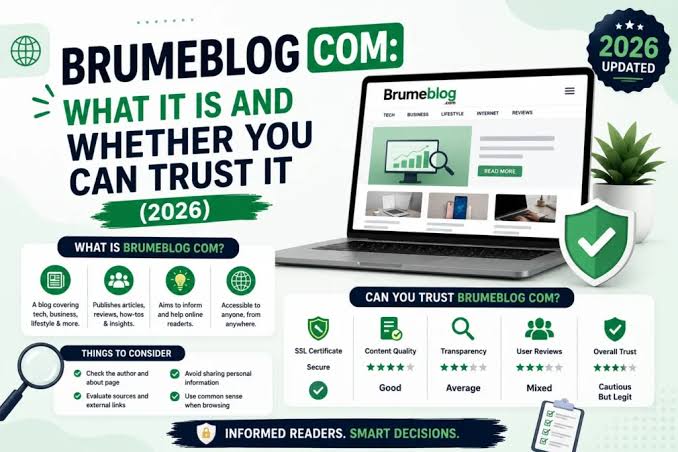
Evaluating credibility begins with checking whether the website explains who operates it and how its content is produced. Look for accessible contact information, an appropriate privacy policy, clear editorial standards, and author details where available. Reliable publishers generally make it easier for readers to understand the source of their information and distinguish editorial content from advertising or promotional material.
Brumeblog com should be assessed using the same standards as any unfamiliar online platform. Check whether its pages use HTTPS, avoid unexpected downloads, and be cautious if a page requests unnecessary personal information. HTTPS encrypts information transmitted between your browser and the website, but it does not prove that the publisher is honest. Avoid entering payment details or account credentials unless the website’s identity and purpose have been independently verified.
Advantages and Limitations of Online Content Platforms
One advantage of online publications is convenience. Readers can access information from different locations, explore subjects at their own pace, and compare explanations without visiting a physical library. Well-written articles can also make unfamiliar topics easier to understand by breaking information into manageable sections and providing practical examples that connect general concepts with everyday situations.
Nevertheless, online content varies considerably in accuracy, depth, and editorial quality. Some articles may omit important context, rely on outdated sources, or present opinions as established facts. A website covering many subjects may also lack the specialist expertise needed for certain topics. Readers should evaluate each article individually, check important claims, and avoid assuming that every published statement has been independently verified.
Alternatives for Finding Reliable Information
If an article does not fully answer your question, consider searching for a more specialized source. Government websites are useful for official regulations and public information, universities can provide educational materials, and professional organizations may publish research or practical guidance. For technical questions, official product documentation often provides more precise instructions than general-interest articles.
When comparing alternative websites, consider the author’s qualifications, the quality of supporting evidence, the date of publication, and the publisher’s transparency. Established sources are not automatically correct in every circumstance, so comparing multiple credible references can be valuable. For sensitive or consequential topics, prioritize primary sources and advice from appropriately qualified professionals rather than relying on a single online article.
Tips for Getting Better Results From Online Research
Before browsing, write down the question you want to answer. A specific goal makes it easier to identify relevant articles and avoid spending time on unrelated material. Use descriptive search terms, examine headings, and compare the information you find with independent sources. If an explanation seems unclear, search for the key terms or claims separately to locate more detailed evidence.
It is also useful to distinguish facts, opinions, and promotional statements. Check whether statistics have identifiable sources and whether quotations can be traced to their original speakers or publications. Be especially careful with dramatic claims, guaranteed results, and recommendations that pressure you to act immediately. These habits can improve your research process and help you make more informed decisions about the information you encounter online.
Conclusion
Understanding an unfamiliar website requires more than recognizing its name. Readers should examine its content, purpose, transparency, and supporting evidence before deciding whether it deserves their trust. A well-organized article can be a helpful starting point for learning, but its usefulness ultimately depends on accuracy, relevance, and the quality of the information provided.
When researching Brumeblog com, take time to inspect the live website and verify claims through dependable sources. Check publication dates, review available contact and privacy information, and use specialized resources when a topic requires greater expertise. By approaching online information thoughtfully, you can discover useful material while reducing the risk of relying on outdated, incomplete, or misleading content.
Frequently Asked Questions
What is Brumeblog com?
It is a website name that readers can investigate to learn about its purpose, published content, and intended audience.
What type of information can I find on the website?
Check its live homepage and article categories to determine which subjects and resources it actually provides.
Is Brumeblog com safe to visit?
Assess its security, privacy practices, and reputation before sharing personal information or downloading files.
How can I check whether a website is legitimate?
Review its ownership details, contact information, privacy policy, and independent references before trusting its claims.
Can I use online articles for research?
Yes, but verify important claims with reliable sources, particularly when conducting academic or professional research.
How can I identify outdated information?
Look for publication and update dates, then compare the article’s claims with current authoritative sources.
Are general information websites suitable for professional advice?
They can introduce a subject, but important medical, legal, and financial decisions require authoritative information and, when appropriate, qualified professional guidance.
What should I do if an article seems misleading?
Check its claims against independent sources, examine the evidence, and avoid acting on unverified information.
Also Read: Voozon.com